Games Are Still Immature
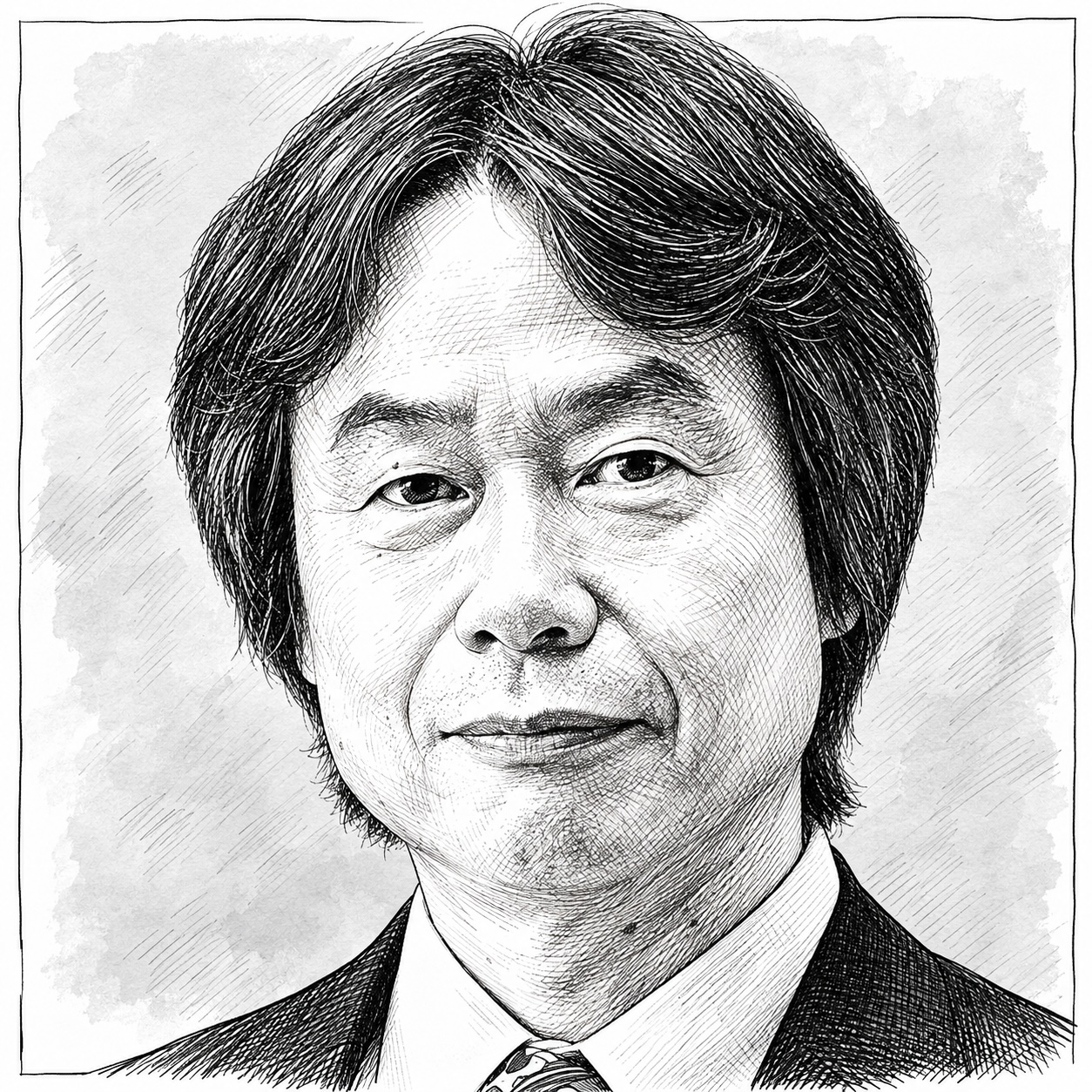

Shigeru Miyamoto, of all people, said it: “I believe this is a revelation of creative immaturity on our part as creators in the video game industry.” The man who has made more great games than anyone said that games were still only partway there.
The Shareholder Meeting, June 2014
On June 27, 2014, I was at Nintendo’s 74th Annual General Meeting of Shareholders. I had left Tokyo a day early, ahead of a conference keynote in Osaka the next day, to attend the meeting, which was being held in Kyoto. It had already begun by the time I arrived, but I found an empty seat near the front and sat down.
I had an odd premonition. If I raised my hand, I would surely be called on. I kept wondering why I would think such a thing while the proceedings moved along, and it came to the last question. Telling myself that the point of coming to a shareholder meeting is to try to ask a question, I raised my hand, once, at the very end, slowly and timidly. … “Yes, you there, in the blue shirt.”
I asked my question. The first to answer was the chair of the meeting, Genyo Takeda — Nintendo’s legendary first game designer, who led hardware development from the Nintendo 64 through the Switch, and who sits at the very core of Nintendo’s hardware making.
Nintendo was in a painful stretch then. It had posted operating losses for three consecutive fiscal years, and the previous term’s Wii U sales had stalled at 2.72 million units, one third of what had been projected. President Satoru Iwata was absent from the meeting for health reasons.
Until Then, the Q&A Had Been About the Environment
Before my question there had been sixteen questions and answers. A report on E3, shareholder perks, news on the new Legend of Zelda, the response to smart devices, the Chinese market, the Wii U software lineup, management responsibility, the earnings forecast for the current term, the executives’ shareholdings, the character business, how often “Iwata Asks” would be updated, and so on.
Honestly, I was thinking: what dull questions to be putting to the world’s creative superstars.
Most of the answers were about the environment outside the company, or about the company’s workings. That the choices for how to spend one’s leisure had multiplied. That high-performance graphics had inflated development costs, creating a world where you could not survive without a hit. That the way information reaches people had changed, and the company had not kept up. That with the Wii U not spreading, software makers had turned cautious.
Even to the question of where games would be in ten years, the answer was: “Entertainment has always been a business of sharp ups and downs, and we have been through it many times.”
Answers at a shareholder meeting are the company’s official words, so most of them close with the vague “we will take that under advisement.” The meeting went on in that key.
The Predicament of the Time
Back then the market’s diagnosis was not “a problem with the appeal of Nintendo’s products” but “the shrinking of the dedicated game console market.” The light, casual players that the Wii and DS had opened up had moved to free or low-priced smartphone games; the reasons to buy a dedicated console and pay several thousand yen for a single title had weakened; time spent on entertainment at home had itself migrated to the phone. That sort of thing. “Get out of hardware, supply software for smartphones.” Analyst after analyst was recommending it. It was true that the Wii U hardware was sold below cost and was squeezing profits, and that Sega, the old rival in hardware, had withdrawn from hardware thirteen years earlier.
Make money on smartphone games? Really? If you put software on phones, what reason remains to buy the hardware? How do you justify anew the value of several thousand yen for a single title? Can Nintendo stay Nintendo? Where do the ways of making software, and the development teams, raised on dedicated consoles go? Does a model that starts free and charges along the way suit Nintendo’s games, or the way they are made?
It did not seem like a good plan at all, yet no other alternative was to be heard either. With no clear, effective move to be made, Nintendo’s three straight years of losses went on. The ups and downs of the industry? It did not look like the kind of situation that would float back up if you just sat and waited.
Nobody had an answer.
I wanted to ask head-on, without making some odd proposal of my own. My question is officially recorded as follows.
I understand your point that ups and downs are inherent in the entertainment industry and in this industry, and I also recognize that the company is in a difficult phase now. Is what is happening now a part of the fluctuations which used to take place in the past too? Or, is the fluctuation this time bigger than before?
In other entertainment industries, take movies for example, the declining popularity of movies was observed after the 1950s or 1960s, and people with the right mind in the industry tried to stop the decline with quality pictures.
Regarding the current situation surrounding Nintendo and its console game business, some are expressing their opinions by saying that it has been caused by smartphones, but I have not been able to find any advice from them that, if executed by Nintendo, would likely make Nintendo a better company. What is Nintendo’s view on these points?
The film industry’s golden age did not end because the quality of its works fell, nor was it a passing up-and-down. The spread of television in the home, a “rival you could watch for free,” crashed the industry. Nintendo, I assumed, was thinking within that same large context, and I wanted to ask head-on for the answer that the questions so far had not drawn out.
Takeda’s Answer
Takeda, who was chairing the meeting, answered first. It is recorded like this.
I recognize that this is a challenging issue, for which there will not be any easy solution. I believe what we are experiencing is a part of a large fluctuation. We, the management, will continue discussions from various perspectives in order to find a solution.
We also believe that we can learn from other mature industries with longer histories than ours, such as movies and other forms of media. I have been managing the company mainly from a hardware perspective, so I would like to ask Mr. Miyamoto, who has been observing the content industry, to share his view.
I was astonished. “No simple solution. One of the larger waves. The industries and media that came before are a point of reference”… A tone wholly unlike the Q&A so far. He took the question straight on, and did not fold it into some easy answer.
And then, of all things, he passed the question to Miyamoto!
Miyamoto’s Answer
I had met Miyamoto once, in January 1992, at CES in Las Vegas, as a member of GF, which is to say, as a developer. And now here was that same Miyamoto, in a hushed hall of hundreds, speaking to me as I stood.
And his answer was a remarkable one.
(Commenting on the previous shareholder’s remark in Q16 that the shareholder thinks that Mr. Miyamoto appears to be (taking criticism) in his stride). Just for your information, I too have been feeling a great deal of anxiety. Mr. Iwata is a president whom I can rely on very much, and I would like to continue this journey with him.
The point raised by the shareholder is a very important one. It is so important that anyone who can create a solution will become an excellent developer. As Mr. Takeda just said, I believe it is important for us to learn from our predecessors in the movie and other media industries.
This is something I mentioned earlier today (during my remarks on E3,) but to some, it might have seemed as though there wasn’t a wide variety of software at E3, and as though many people followed the same direction to make their video games. I believe this is a revelation of creative immaturity on our part as creators in the video game industry.
The late Mr. Hiroshi Yamauchi, the former president of Nintendo, often used to say that in the entertainment business, only one can become strong and all of the others will become weak. With this remark, he was not referring to the arrogance of the winner. He mentioned this to describe the nature of the entertainment business, which tends to create just one winner because in the entertainment business everyone buys your offering if you create something unprecedented, and consumers do not think it is necessary to purchase products from others in the industry. To survive in the entertainment industry, it is often the case that everyone tries to follow suit with the strong one.
My comment may be at risk of being misinterpreted, but in the digital content field, I think that our creativity is still immature. In the world of comic books and movies, there are people who are challenging themselves to be even more creative than before in creating their content. I believe that we (those who are creating digital content called video games) are still in a transitional period and will eventually step up into the phases where we expand and enrich the substance of our creativity. If we can manage Nintendo without losing sight of this challenge, I believe we might be able to create new entertainment that dominates the industry.
Also, some may think it is fair to compete with others on the same hardware platform, but it is always challenging to become the one strong existence among so many companies, and to Nintendo, it is more advantageous to create and propose to consumers a brand new framework that includes hardware as part of the structure. We would like to continuously develop something unique by not abandoning this strength of our company. I ask for your continued support.
Shigeru Miyamoto, of all people, said it: “I believe this is a revelation of creative immaturity on our part as creators in the video game industry.” The man who has made more great games than anyone said that games were still only partway there.
My heart was full. (So much so that I thought I might as well forget tomorrow’s keynote and go straight back to Tokyo.)
Miyamoto did not say “immature” out of modesty. He was saying that we are still in a transitional period and will eventually step up into the phases where we expand and enrich the substance of our creativity — that there was still more that could be done. It was a declaration of faith in the future and the possibilities of games. While the analysts laid the predicament at the feet of external factors, Miyamoto said there were still things they had not done, turned the problem inward rather than outward, and questioned their own immaturity and their own creativity.
What Followed
In March of the following year, 2015, Nintendo partnered with DeNA and entered smartphone games. At the same announcement, President Iwata revealed that a new dedicated console, codenamed “NX,” was in development. They would put games on phones, but they would not quit the dedicated console. Smartphone games never became the center of Nintendo’s business. In July of that same year, President Iwata died at 55, and the company’s two remaining representative directors were the two who had answered that day, Takeda and Miyamoto. The Nintendo Switch, released in March 2017, overtook the DS at the end of 2025 to become the best-selling console in Nintendo’s history.
In 2023, The Super Mario Bros. Movie became the first film that year to pass one billion dollars in worldwide box office. On that day, film was a medium to learn from. Now Nintendo was standing inside it. And on October 23, 2026, the government decided to award Miyamoto the Order of Culture. The first such honor ever to come from the world of games.
The Miyamoto who said in 2014 that creativity was still immature, that there must still be more that could be done, has done exactly that ever since, and I believe he is doing it still.
Congratulations on the Order of Culture!
Sources
- Q&A, the 74th Annual General Meeting of Shareholders, page 1 (Japanese) / English
- Q&A, page 2 (Japanese) / English
- Q&A, page 3 (Japanese) / English
- Q&A, page 4 (Japanese) / English — the question and answers quoted above are from Nintendo’s official English translation on this page.